someone else's shoes
English articles

The Allure of Red Bottom Heels

Red bottom heels have an undeniable allure that captivates my attention. They remind me of the iconic Louboutin heels. One day, on an ordinary housing estate where everyday people reside, a woman appeared before me, confidently wearing a striking pair of red bottom heels. I couldn’t help but wonder if they were real, as high heels over two inches are rarely seen in my neighborhood. Most people shy away from the challenge of walking in such daring footwear, yet the unmistakable style of Louboutin heels is easily recognized.

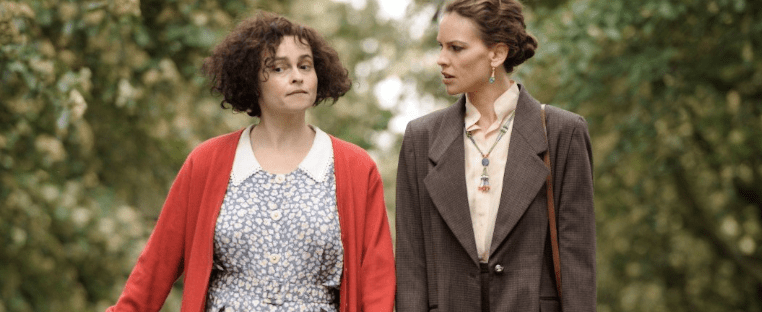
In JoJo Moyes’ novel Someone Else’s Shoes, the Loulontin heels gave women confidence to stand up tall and excel in her roles as a sales representative. The story also features another woman who feels incomplete without her Chanel, Gucci, and other designer outfits and shoes.

The novel revolves around these two women as they navigated difficult circumstances where their partners made them feel powerless and frustrated. How was it possible for a woman to lose everything after her husband left her, leaving her penniless and without even a decent outfit? Meanwhile, another woman endured a horrendous experience with the most inconsiderate boss imaginable. Their lives intertwined when their bags were accidentally swapped at the gym.

One cannot underestimate the resilience and solidarity of women. In times of hardship, they often support one another with remarkable empathy. I admire how the chef in the story provided a new home for the struggling woman. Despite losing her wealth, she stood tall, united with her son, and embraced life with dignity alongside her new friends.

There are countless stories of men who exploit marriage to advance their careers or women who marry wealthy individuals to climb the social ladder. When faced with financial difficulties, money can seem to change everything, yet it’s challenging to sacrifice one’s pride to live with someone lacking genuine connection.

Fewer people, especially in the younger generation, view marriage as the ultimate goal. They aspire to build families and establish solid foundations for their careers, but not at the expense of their personal ambitions. With confidence, they pursue their passions without the constraints of marriage.

I’m left wondering if I truly saw a real pair of Louboutin heels that day. Ultimately, I hope women find their confidence not solely through material possessions but through the unwavering support of their family and friends.
The Party Crasher novel
English articles

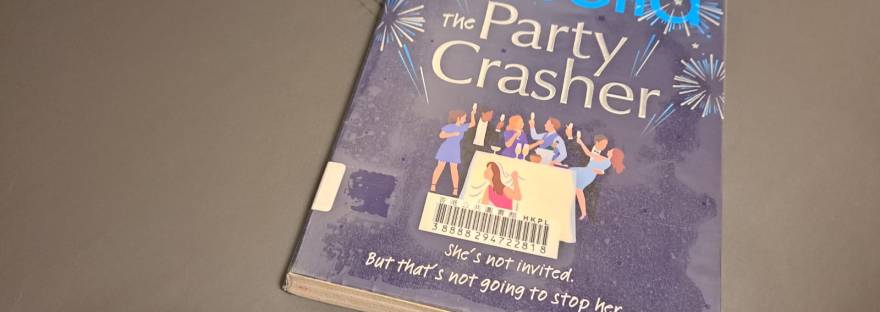
Crashed the Family Party

Is it a good idea to set an entire story in a house for over 400 pages? We’ve seen writers attempt this in both movies and books, but not many have succeeded. The story starts with a familiar cliché: a couple divorced, and an old family property needs to be sold. Effie, the youngest daughter is in her 20s but still struggles to let go of the house filled with cherished memories. She resents her father for dating someone new and planning to sell it.

I found The Party Crasher fell short of achieving the classic, humorous love story we see in the Shopaholic series. While there are a few warm scenes, the plot feels shallow and doesn’t provide enough momentum to keep me joyfully engaged over 300 pages.

Effie’s search for Russian dolls serves as a metaphor for the people gathered around the dining table, each with their hidden agendas. However, I didn’t fully grasp the significance of these dolls until the end, when I discovered that the tiny diamond her ex-boyfriend had given her was hidden inside the doll set. Even after years apart, she still misses him. Like many love stories, they reflect on the past and eventually reconcile. Ultimately, a proper family gathering takes place to say goodbye to the house, bringing closure to this house. A new chapter begins with pregnancy, planning for new jobs and many more.

Jojo Moyes
English articles

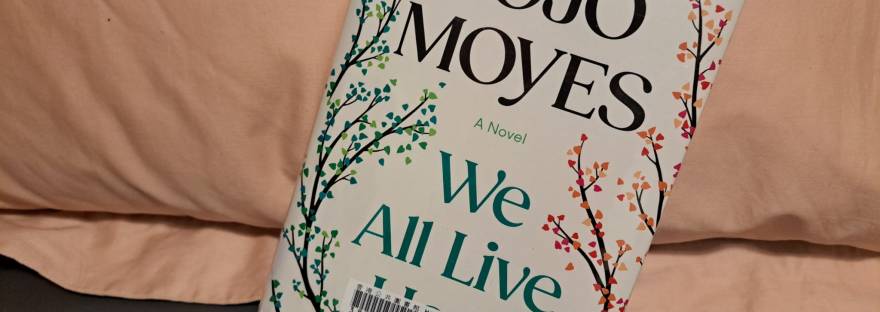
We all Live Here

I hadn’t really spent much time reading for months, but recently, I swapped my workout routine and hours spent on YouTube for some quality reading time. One of the two fiction books I devoured over the weekend was “We All Live Here” by Jojo Moyes.

Honestly, I can be pretty impatient, so diving into Jojo Moyes’ books is sometimes a bit of a challenge for me. She takes her time to build her characters, often starting off with some heavy themes that can feel pretty sad. There were moments when I struggled to process all the emotional turmoil the characters were going through, and I almost gave up. The “Me Before You” series, however, stands out as an exception to this.

If I can get through about a quarter of her books, I usually start to connect with the story and my interest kicks in. That’s when I really pick up the pace with my reading.

With “We All Live Here,” I found myself getting frustrated—just like the main character, Lila. Life can be so complicated and uncertain, and when I read, I want to find joy, humour, and some wisdom. I prefer not to immerse myself in the deep troubles faced by the characters.

Did some parts of the story feel familiar? For sure! Certain scenes reminded me of shows like Desperate Housewives, Big Little Lies by Liane Moriarty, or even Bridget Jones: Mad About the Boy. But this story of “We all Live Here”  is more grounded and focuses on everyday life rather than big drama.

In the end, while the story concludes on a positive note, I felt that Jojo Moyes could have invested more chapters in exploring the characters’ development of their affections for one another. The transition from a troubled beginning to a happy ending felt somewhat rushed and lacked the depth needed to truly resonate with readers. This shift didn’t quite capture the emotional journey that could have made the resolution more impactful and heartfelt.

55 steps movie
English articles

55 Steps 

It’s not difficult to find people sharing horror stories about receiving treatment in a psychiatric ward. People mainly complain that they lack privacy and freedom, and they feel a loss of respect in the ward, which makes their conditions even worse. Someone told me that she wanted to erase the painful experience and would never want to return to the ward. I could see that she functions normally and participates in community activities like everyone else, but she simply is not able to hold a job. When we went out fundraising for a non-profit organization on a Saturday morning, she worked harder than we did and raised a good amount of money from people on the street.

A few days ago, I came across the movie “55 Steps,” but the opening scene was so disturbing to me that I found it painful and hurtful to continue watching. Instead, I did some research online to learn about the true story behind it.

The movie touches on an important topic: “patient-informed consent.” Do we ask for information about the pros and cons of a treatment or medication before deciding whether to proceed? A cancer patient can choose whether or not to undergo chemotherapy. Should psychiatric patients, if admitted voluntarily, have the right to informed consent and the choice of which medications they receive?

Eleanor Riese was diagnosed with schizophrenia in her 20s and was admitted to the hospital as a voluntary patient for her mental health issues. The opening scene depicts her struggle with healthcare workers attempting to restrain her and administer medication via injection, which she refused. Her body trembled under the effects of the powerful psychiatric drugs. The treatment demonstrated that the facility did not respect patients’ preferences, and the approach appeared to be forceful.

This incident occurred merely 30+ years ago. Psychiatric patients are not devoid of feelings; they are highly sensitive and particularly vulnerable to the negative impacts of their surroundings. Eleanor could hardly bear the treatment and reached out to a human rights lawyer, Colette Hughes. She decided to challenge the healthcare protocol by filing a lawsuit.

Thanks to Eleanor, she made dedicated efforts to fight for the basic right to informed consent and the ability to refuse psychiatric medication in the absence of an emergency. She managed to push the system to evolve based on her own experiences. Sadly, it was too late to reverse the damage caused by the side effects of the psychiatric medication, and she died at the age of 47 in 1991.

loveyourlife
English articles

Love Your Life

Have I ever truly asked myself, “Do I love my life?” I think I have not. I often choose bread over love, as it provides me with a comforting sense of security. The feeling of love brings immense joy and happiness, yet it is accompanied by the potential for deep sadness when a relationship crumbles.

I was taken aback by a reality program featuring two strangers who marry without ever meeting or knowing anything about each other beforehand. They encounter one another for the first time while walking down the aisle. It seems absolutely absurd.

Sophie Kinsella’s book Love Your Life paints a captivating scenario where a man and a woman fall in love without knowing each other’s names or backgrounds, relying solely on their interaction and chemistry. In contrast to this romantic ideal, they soon realize that their lives exist on entirely “separate continents”, and they grapple with the challenge of making their relationship work.

What I find particularly enchanting is how Sophie depicts her characters as wonderfully eccentric individuals who bravely follow their hearts in their quest to build a connection. It’s reminiscent of trying to mix water and oil; how can such opposing elements ever blend harmoniously? Clearly, they are not perfect. They are not living the lives they aspire to have. To some extent, many of us find ourselves in similar predicaments for a multitude of reasons. We are all imperfect beings.

I am profoundly moved by their honesty with one another, and I admire how they take the time to reflect on their actions and strive for change. Such moments of introspection are often rare in many relationships.

Just as oil and water can create a beautiful dish when combined thoughtfully, so too can a perfect dough be crafted for baking exquisite bread.

It’s truly a stroke of genius to narrate this story without coming across as preachy. The tone is light-hearted and humorous, making for an enjoyable read that I savored last week.

On a more somber note, I was saddened to learn that the author, Sophie, has been diagnosed with a brain tumor. I sincerely hope I still have the opportunity to relish her future works.

Wishing her good health and strength!

uncertainty
English articles

Uncertainty

In my journey to Portugal and Spain, I did not miss out on an exciting adventure. I felt I was blessed somehow. 

A few days after returning home, Istanbul experienced a 6.0 magnitude earthquake which did not cause a lot of damage but could give one a shock. I took a connecting flight in Istanbul to Lisbon and back to Hong Kong.

I then found out that the airport in Istanbul was designed to be earthquake-proof against 8.0 magnitude. Maybe that’s the reason shops at the airport charge massive amounts for a piece of bread or burgers.  

Last evening, everyone shared with me the news about the massive power outage in Portugal and Spain. That’s scary! I once thought about leaving Hong Kong before the Easter holiday and coming back in early May. 

We had a power cut at the Porto’s apartment we were staying; however, it was an easy fix. If I had still stayed there with my friends at the end of April, where would I be? Porto? Galicia? That could leave us in a panic and a catastrophic kind of adventure. 

People’s minds feel unrest in this century full of uncertainty.  I feared nothing when I travelled at a young age. I saw peace. I smelt simplicity. I adored friendship. Now I sense hidden risks at the corner of the streets or a sense of insecure feeling when a few young people stare at us on an unfamiliar land. 

That might be the reason I want to travel with someone at my age now.  More people seek a spiritual home where they can trust and feel safe.

KAJ
English articles

What a song is like about sauna?

When the song “Revolution” was released on the internet, I was 100% percent sure that Mans Zelmerlow would grab the trophy at the Melodifestivalen. The song follows the classic Sweden pop song formula, which should be a Eurovision fans’ favourite. Look at its stage production. It is meticulously designed and will leave fans an impactful memory of the performance. 

I am not particularly pleased to see Mans Zelmerlow at Eurovision again, though he’s an icon. The song is not a total breakthrough. It creates fireworks but not excitement.

After finding out the news that NAPA won the Festival da Canção 2025, the news of KAJ winning also popped up on the internet.  

I hadn’t followed Melodifestivalen, therefore had no clue about KAJ

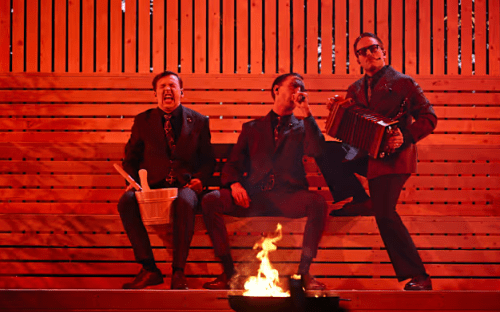
To my big surprise, Bara bada bastu (Let’s just go to sauna) is nothing like a Swedish pop song, but a truly fun song about sauna. The staging is excellent. Why did KAJ write a song about sauna which originated in Finland?

The band is actually based in Finland, though the group performs mostly in Swedish. How amazing it is that Sweden finally sends a song in their own language rather than English!

After all, Eurovision is the best occasion for fans to appreciate European languages other than English.

In the meantime, I just wonder if fans now prefer more honest and genuine performances like KAJ or NAPA while the highly commercial songs are pursued, but to a lesser extent.  

festival da cancao
English articles

Festival da Canção 2025

There is almost no way to avoid getting to know the result before watching the recap of the football match or a singing contest with the prevalence of social media and news online.

My hopes are high for the contestants at this year’s Festival da Canção , and I had thought that either Josh, Diana Vilarinho or Fernando Daniel would be the champion. But to my big surprise, Napa won. The curiosity drives me to dig deeper to learn about the truth – how special is this song?  What is Napa? 

While Josh’s Tristeza looped playing in my head for two weeks. The song “Medo”  appeared to fight with Tristeza in my head from time to time.

I have to admit that Tristeza’s performance was weak from the perspective of lyrics and staging. The staging was shocking that Josh was hanging in the air performance with one hand grabbing a long pole. It’s not a pole dance where you can move again. Being confined to a pole, Josh’s posture is rather limited and so do the camera angles. I truly hoped he could win, and the staging would be elevated, but the song started to hurt me a bit, like the “title” – sadness. It is a bit too emotional and too dark for Eurovision and everyday listening.  I didn’t add it to my playlist for this reason. 

Fernando’s song talks about fears (medo) and his staging is the most well-planned one, and he did as much as he could to win the vote, like touring around before the singing contest. The song is, indeed, mediocre. I consider his performance was not genuine enough. However, I’d prefer this to Cotovia by Diana Vilarinho as the Eurovision audience will embrace Medo more than Cotovia. 

Anyway, the singing contest mimics the voting situation as in Eurovision. Judging from regions means Algarve judges giving 12 points to a band from Algarve, and Madeira judges fully supporting Napa who comes from this island. 

Well, the song Deslocado by Napa is on my playlist as it’s simple and easy to listen to. I realised the lyrics are about the hard feelings of leaving Madeira for another place. Many Portugueseans leave the country for work, and I guess many audiences resonate with this familiar feeling. 

I must say I’m not disappointed with the result but very surprised that Deslocado won the hearts of many others. 

When I watched the replay of the festival, I could see the taste of the Portuguese judges was very distinct. They favoured traditional songs that the audience in the modern days won’t be favouring.  

Somehow, Portuguese audiences were conservative. Henka got the highest vote but some of the traditional contestants still gained a number of supporters. Napa gained 8 points. Who would have thought the band gathered far more support than Fernando Daniel and Josh.

I must say, it’s so hard to predict the result of the Festival da Canção that it makes the contest interesting to watch. 

English articles

Think outside of marriage

Sex scandals are often the twin sisters of powerful people, including CEOs, lawmakers, and presidents. The movie Babygirl shows this through Nicole Kitman, a CEO who finds herself irresistibly drawn to Samuel, an intern who sees her true self. The film looks at their complicated relationship, showing the vulnerabilities and temptations that accompany positions of power. 

To be honest, I fail to see Nicole Kitman as a CEO in the movie. It’s hard to believe that she would personally involve herself in the company’s internship programme. How can a CEO be so naive as to form an emotional connection with an intern? This situation reminds me of Bill Clinton, who famously engaged in an extramarital relationship with an intern, which dominated the headlines. While the intern may not have been conventionally attractive, she was perhaps more accessible to his needs.

I’ve observed married men attempting to flirt with women in the workplace, and another man seeking out “fun” cautiously. The label of “married” can create a mental barrier, yet it doesn’t always prevent individuals from betrayal.

The movie Nova and Alice also explores the theme of affairs developing during a tour. Chemistry ignites between two people, even if one is in a stable relationship. Such relationships can sometimes feel mundane, lacking excitement and spontaneity. It’s difficult to determine if stepping outside a stable relationship is inherently wrong.

Ultimately, a true partner is someone who supports you when you’re unwell, and that support is the most important aspect of any relationship.

English articles

Love, Holly

It’s been a while since I picked up a romance novel, and I’m really glad to feel my energy returning. After reading pages and pages in a month’s time, I must admit it feels like a victory!

This romance might have a classic vibe, with characters whose lives are intertwined by a single incident or fleeting encounter.

I absolutely love the concept of a lonely pen pal club where you write letters to strangers in different towns. I once received a handwritten letter from a stranger trying to persuade me to believe in God. It felt so personal —nothing like a mass-produced brochure. I even kept it for a while since it was such a rare experience.

A letter written in person still has the power to warm a lonely heart. 

In this pen pal club, most letters go unanswered, allowing people to express their true feelings anonymously. But the letter Holly receives is different; it’s filled with grief she completely understands, and the writer mentions a place she knows well.

This connection drives Holly to track down the writer. Both women have faced life-altering car accidents, leaving them with deep wounds. Determined to uplift this elderly woman, Holly pours her heart into helping this woman. And they become friends. 

The central theme of the story revolves around accountability in those car accidents. Was the driver at fault? Life can change in an instant, leaving us vulnerable to pain and misunderstandings. Healing relationships often requires reopening those wounds and embracing others’ feelings.

As Holly navigates this journey, she not only finds love but also reconnects with her own family.

lucca's world
English articles

Lucca’s World

Neurological damage, whether stemming from hereditary factors, accidents, bacterial infections, or stress, can profoundly affect the quality of life. A few years ago, I assisted with the Hospital’s charity work, I encountered several children with cerebral palsy. Sadly, many of these children in China were abandoned. Their disabilities hindered their ability to walk and speak.

A middle-aged man living in a village decided to adopt a young girl with cerebral palsy. His story particularly moved me. Despite being unmarried, he has dedicated over a decade to caring for her. However, as she entered her teenage years, the man also grew older. The challenges of daily care—such as bathing and using the toilet—have become increasingly difficult. 

I witnessed the girl undergo various surgical and physiotherapy treatments over the years. Unfortunately, I did not perceive these as significant improvements. She has a strong mind and remained optimistic each time I saw her. Initially, I believed these treatments alleviate some complications of cerebral palsy. However, these treatments cannot repair the underlying brain damage. 

My point of view shifted slightly after watching the Netflix movie “Lucca’s World.” It introduced me to a machine called Cytotron. This machine claims to treat cancer and neurological disorders without the side effects commonly associated with drugs. Developed by a scientist in India, this technology seems almost unbelievable. The machine encourages tissue regeneration. This explains why Lucca’s neural connections multiplied after a series of Cytotron therapies. These connections are crucial for limb movement, cognitive growth, and language development.

Yet, I found myself questioning: Is it too good to be true? Can treatment be so precise that it targets only the damaged areas? What about the healthy tissues exposed to the Cytotron rays?

If the therapeutic benefits of this machine are as remarkable as suggested, it is indeed a divine gift. Many contemporary diseases, including strokes, brain tumors, Parkinson’s disease, dementia, depression, and anxiety, are linked to neurological health.

I was deeply moved by the sacrifices made by Lucca’s parents. This journey marks a pivotal moment in their lives, allowing them to pursue their beliefs and hopes. The love within their family is palpable. I sincerely hope it inspires hope in others facing cancer and neurological challenges.

English articles, Uncategorized

Finding Meaning in Trivial Work: Lessons Learned

Approaching Christmas, the office is quieter; I delight in having chit-chats with individual colleagues about trivial matters. I had thought that less work at the office made one feel good. At least that’s what I thought. I opted for a position with less pay rather than a senior executive. After all, work-life balance and well-being are so important that I have recently embraced them. 

This mentality has changed in 2024. The economy is deteriorating fast, and everything can change without warnings. 

A sixty-year-old man is not content even though his work contract has been renewed. His boss assigned many tasks to a younger colleague, and now he has more free time at work. Why does he not feel happy? With the renewed contract, his work should be stable enough for years. But human beings are strange animals. Our confidence grows when completing important and meaningful tasks that make us happy. Somehow, ego dictates how we feel. 

I recalled there were times I felt stupid doing the trivial filing work. I asked myself, “What am I doing here?” I had years of high-level training, and then I did the simplest work ever.” I can relate to his feeling. I decided to celebrate moments when I finished tough work and events.

Yesterday, I struggled with hitting the ball through the first gate. That’s essential to partner with your teammates when playing gate ball. Eventually my last strike got me through the first gate. It also got me through the second gate. I defeated the rival team and helped my team win a few more scores. 

I am still learning the mentality of sportsmanship. Savour the moment of championship and tell myself not to give up. Never too late. I may have to wait till good things happen to me.

Do not belittle yourself. Buddhists in the temple sweep the floors and dust every corner every day. These routines look easy, but not on cold or hot days. Prolonged hours of trivial work can be a training for having a stronger mind.

English articles

Obsessed with Apartment Hunting?

I constantly saw myself having two apartments in my dreams, and I did find myself feeling insecure when staying in an apartment whose door may be easily opened, or accessible by other people. Luckily that was just a dream. 

A couple of times, I lived in a fancy house with a big living room, cozy bedrooms, and a garden. The house was so close to the street, and I could almost feel the rain with my feet if I wanted to. Pedestrians were literally outside my front window, which I did not like. Sometimes, I could climb down to reach the swimming pool, and so many kids were outside my windows.

In some of my apartment dream series, I was staying in an apartment close to where I lived before. It was an old city area close to Central, and restaurants were nearby. I saw a couple of people staying in my room or in my toilet. I felt frustrated. Not only that, but I did not want strangers taking up my space or invading my privacy. I got the feeling that I had another apartment in Hung Hom, and that apartment had a pleasant study room. Coincidentally, I had lived in that area for two years. 

Then in my weird dream last month,  I saw myself buying an apartment with shabby structures that I totally could not accept. When I woke up and looked around my “real” apartment, I felt I was blessed to have my current apartment but not the apartment I had in my dream. 

I’m not sure if I indulge myself watching the Location, Location, Location programme, so images of apartments manifest in my dreams.

English articles

Jane Austen小說中的美國人

Hallmark 另一套向Jane Austen致敬的電影An American in Austen,女主角Hariet 活在圖書館中,她對Jane Austen的鍾愛程度似乎有點過火,甚至認為自己只能嫁給Mr Darcy。當她的男朋友花盡心思向她求婚時, 她只是回覆Maybe。她的另一半和朋友都大感失望。

怎料, 她竟然如願以償, 投入了Pride and Prejudice 的故事當中, 成為Bennet家於美國居住的遠房親戚,Mr Darcy更對她另眼相看。她作為Jane的粉絲,又怎樣能夠「順其自然」,讓Darcy愛上自己,而不是Elizabeth。她的加入,令Elizabeth 變得忙亂,差點誤嫁給情場騙子Mr Wickham。

她忙於撥亂反正, 亦明白到Darcy雖然是夢中情人,但絶不想破壞Jane Austen 名作的劇情,也不會貿然愛上不太認識的Darcy。

當她夢醒之時,心知真命天子不是Mr Darcy, 而是自己的男朋友,急忙找他表白自己的心意。

雖然故事沒有太大的創新性,但總算勾畫了現代書迷對Pride and Prejudice的一份尊重,也點出萝中人沒有真實感, 可能是一個假象。外國人加入一個古典故事中, 也頗有趣, 尤其她富有超能力, 可以「預知」未來。 

English articles

Father and son

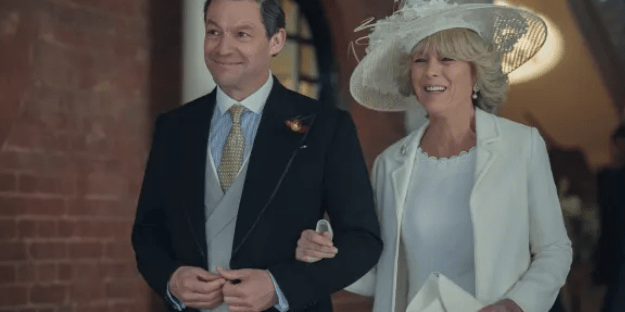
Prince Charles sought to mend his relationship with William following Diana’s passing William. He could sense his son’s unspoken anger and immense sadness, recognising that without addressing these emotions, genuine communication between them would be impossible.

When William confronted his father, he held Charles responsible for failing to protect his beloved mother from the paparazzi and the fatal car crash. In reality, William was weary of the constant “protection” himself. Would life be fun without constant surveillance, especially at parties?

The weight of his future role as king had never felt as heavy as it did when he walked behind Diana’s coffin. He wanted to avoid the overwhelming attention that came with his position, a stark contrast to his mother’s ease in public despite her efforts to evade the paparazzi.

A candid conversation with his grandfather revealed William’s deep-seated fear of being constantly watched by the world, now that he had taken Diana’s place as the centre of attention. Despite his handsome appearance and regal stature, he struggled to embrace his role as the object of affection for countless young girls.

Charles, too, was grieving over Diana’s death, sharing in his son’s pain.

While at university, William found solace in the condolence letters he received from people. The memory of Diana’s warm smile continued to resonate with many, despite her imperfections.

English articles

The Crown


The last episode of season 6 of The Crown set the end of this TV series. With Camilla marrying Charles eventually, there is nothing more the royal fans would love to see earnestly except the marriage story of Kate and William. However, it is just a fraction of a story that can attract viewers to follow the whole season. Anything else? How about the infamous adventure of Harry and Meghan? A strong no from many viewers, thank you. 

I can relate to how the writer feels about season 7. After all, he spent 10 years writing this Netflix series. It achieves what he intended to achieve – to depict a remarkable, historical story of great interest in the most entertaining way, and help Netflix to establish a solid reputation for its series. 

I love the scripts that sound natural and smart enough to make me smile, cry, and try to look into the historical facts more.  A fascinating royal life is portrayed right in front of us vividly, and the acting looks so real. What’s more I’m looking for. Maybe a change in Diana’s tragic story. Can she be the Queen in a TV series, instead of dying with a weird, unattractive man?

Sadly, all the incredible things have to come to an end at some point. I truly respect the decision that no more season 7 is planned. Despite the Crown is fiction, it somehow touches on many historical facts and historical figures in the past 60 years. It reveals the strong emotions the Queen, Diana, Charles, William, and Philip experienced in many events over the years. They have feelings like ordinary people. They look for allies and support from siblings and the other half. Some are more successful than others.  

The writer Peter Morgan expressed that he wanted to remain a careful distance from the present and keep the series historical, not journalistic. There are enough writings of royal stories. There is no doubt he is an expert in the area. I feel relieved that the series ends with a happy ending. Our spirits need a boost and the royal family seems to bring hope and joy to the Brits.   

English articles

Celebrating a different love

The new year gives me time to catch up on some old memories, including the “Queer as Folk” TV series. Original a TV series from the UK, it caught enough attention that the Americans have adopted the series and developed their version.

Aidan Gillen posed as Stuart is almost a Master of a Universe who has slept with half of the men in the community. His friend Vince has a crush on Stuart but never tells and does not have luck in the dating scene. Vince is simply too cute for us not to like him. He has been waiting until one day Stuart meets the 15-year-old “sunshine” boy Nathan who explores the gay scene and finds himself excited with everything he sees. 

There were no TV series with that much nudity at the time. In the TV series, gay men seem to live in a proud community and can be successful like Stuart. A proud man who lives his life like no others. 

Nathan is inexperienced but full of curiosity. He runs away from home but finds his confidence in this new world. 

The gay scene in Hong Kong might not be comparable to that of the TV show twenty years ago but we could find drag queens in specific bars or a few bars who attracted specific crowds who wanted to pursue different lifestyles. Should we call this a concept of freedom?

After all, that’s the era gender has become blurred. Singers and bands like Duran Duran, Thompson Twins, and Culture Club dressed so glamourously and in style that I can’t call them men or women at all. There were no “non-binary” labels at the time. I’m excited that beauty and makeup transcend the limitations of genders. I consider pursuing something you believe is cool.  I was so naïve that I found myself immersed in the thought that I might turn myself to be a Jew one day. 

So, unfortunately only the American version of the “Queer as Folk” is available. I can’t relate “Brian” is a name to represent sexy and powerful guys like Stuart. Michael is not as innocent as Vince.  There are enough “meats” to draw the gay audience and it’s surely daring to bring forward a vivid gay scene in the TV series. After all, Brian is not invincible. He manipulates his friend Michael when Evan leaves him. His encounters with Evan are somehow naïve that I have to stop watching the programme. 

Only if I can watch the British version I can give the TV series justice to comment any further. After all, the image of Stuart cannot be matched by Brian, a young executive who looks like a boy. Stuart is carefree, wild, and arrogant and has no fears. He cares less about people’s feelings as if he dominates the world. It just makes me want to look into this character and get to know him more. 

English articles

Well-Being

“Beyond the satisfaction level of income, you can buy more pleasurable experiences, but you will lose some of your ability to enjoy the less expensive ones.” I read this quote from the book, “Thinking Fast and Slow” by Daniel Kahneman.

I’m never rich but I can relate this idea to what I experienced when I travelled first time. I sat by the window seat, feeling excited to see the plane flying among the clouds. A simple experience was a mere pleasure when I saw Paris, Greece, or Italy. The enriched culture, exotic appearance of people, and even the night train had become very sexy! I could survive with baguette for a few days, or sample cheese and skip my lunch.

After years of travel, I start to look for something more “fascinating” to stimulate the senses, or just lie on the beach in a resort enjoying sunshine and good food.

The book talks about the measurement of well-being by U-index. What’s well-being? Health? Happiness? This index refers to the proportion of time people spend in a negative emotional state while commuting, working, or interacting with people around them. If you sleep 8 hours, you commute, work, and enjoy time with families for 16 hours. If your U-index is 25%, that means you feel emotional discomfort or pain for around 4 hours.

The measurement is solely a perception of how you feel rather than the actual health conditions. People who feel more positive and can bear pain might be better off in well-being. According to Kahneman, higher income can mean that you can buy more pleasures by obtaining luxurious goods or having nice vacations, but that does not translate to emotional experience. Therefore, better life satisfaction does not equal enhanced well-being.

Another interesting point he points out is that people with religious faith enjoy positive affect and stress reduction, but they cannot reduce any feelings of depression or worry. Nevertheless, the idea of perception is very powerful, not only in marketing but also in happiness and well-being. The next question is how can we generate positive energy and feel better in the long run.

English articles

Farewell Gifts

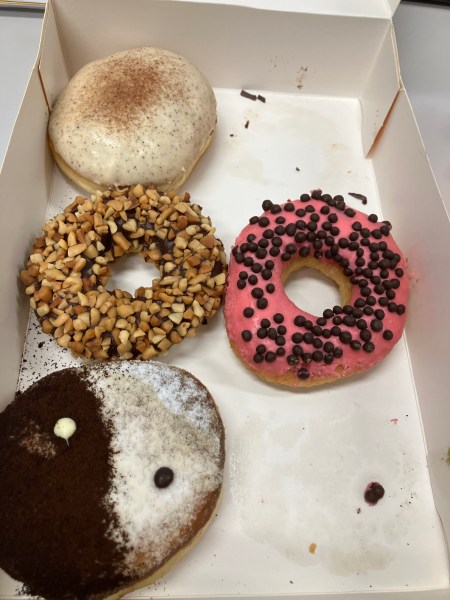
Giving colleagues small farewell gifts is a popular ritual in Hong Kong. In the past few months, I received a pineapple snack, a biscuit, a tasty pudding, and today, a fortune cookie and a doughnut from a colleague who left the team and transferred to a new post with better pay. My boss also treated us to a Japanese tempura restaurant. Both the noodles and tempura made my palate very satisfied. The free deep-fried octopus and sesame mochi are also tasty.

Planning such treats is not easy. In a large corporation and a mixed office, should I give away cakes to colleagues with whom I have no interaction at all? How about the office, of which I barely know but one or two people? It was not an easy choice. And the cost of gifts can easily shoot up to a few thousand if it involves so many departments.

I never like to buy a lot of souvenirs when travelling. However, working in a large organisation with a lack of decent pantry space makes it difficult to distribute snacks efficiently. I definitely plan to have rooms for snacks on my upcoming trip. 

When my desk is constantly filled with snacks from colleagues, there is no way to avoid the chance to return those favours. 

Since we aren’t allowed to accept gifts from customers or vendors, I’m not sure whether my supervisor would like to give us goodies. A free mooncake can briefly make you happy. The perfect food for a lengthy Zoom meeting is Greek yoghurt.

Sometimes I feel like a spoiled child, but I’m glad I don’t have to stress about how much money to contribute towards dinner or a farewell present for my coworker. 

Life can be simpler and happier.

lanterns
English articles

Mid-autumn Festival

I deliberately plan my work with delightful moments sometimes, for example, having a site visit followed by a lantern-making workshop during lunchtime. Another day, I headed to the lantern riddle event after the lunch break, extending my ME time at work. 

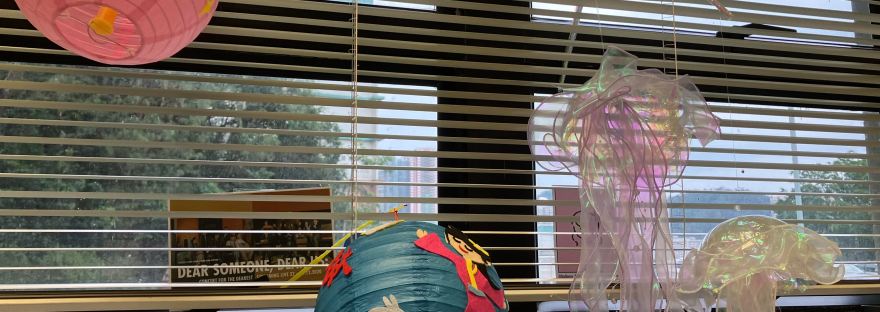
My desk is now full of lanterns by the window. Even the hospital tuck shop is having a good mid-autumn festival promotion for ice creams, popsicles and drinks. The mid-autumn festival celebration has become a huge thing this year. 

My friend often reminds me to refocus on positive thoughts even though I have found pain in my ear, tightness in my back muscle or constipation. We always want to get rid of the dreadful, awful feeling, but wait! Hang in there. I did try, and it was not easy. 

Friends’ support and a pleasant work environment give me a cheerleading effect. 

“Acknowledge the unpleasant feelings with gentleness and kindness. Feel them with curiosity instead of strong negative thoughts,” my friend reminded me. Of course, seeking treatment or relaxation to soothe those feelings if possible.

I did find deep breathing for hours could soothe my ear pain one day. Yeah! It takes such a long time to wind it down. I thought my body wanted to tell me I shouldn’t ignore the headache, so it passed on to my ear. Anti-inflammatory ear drops could help. 

I was convinced to break my prejudice to enjoy a kiwi fruit a day for constipation. Other options can be laxative medicine or probiotic tablets. Exercises and massage are also helpful. But hot pad, kiwi, vegetables, stretching and walking/running are the best solution for me. I opt for natural options if possible. 

Compared with corporations and small businesses, I’ve found hospitals put more effort into supporting staff in stress management, especially in the rehabilitation hospital where I’m working now. After all, most patients are frail and old. Without an open heart and a positive mindset, patient conditions can affect one. 

Typically, people who are either less educated or in middle age work as patient care assistants in Hong Kong. They can be very gossipy workers, but many tend to just focus on enjoying a good meal rather than focusing on the pain that patients are suffering. Wards can be a high-risk environment, but no one knows what will happen the next year. So, just live in the present moment.

More celebrations to come before the mid-autumn festival on 29 September – volunteer programme for patients, team lunch, etc. After all, restrictions are kept for too long for life enjoyment.